All stages at one site in Navoi Region: cultivation, harvesting, retting, decortication, advanced processing, quality control and shipment. Click a stage to see the details.
Licensed varieties with THC < 0.2% under precision center-pivot irrigation.
Variety: Cannabis sativa Hybrid 01. The land in Kiziltepa District, low in organic matter and saline in places, was prepared over three years: mineral nutrition, irrigation and agrochemical monitoring. Industrial hemp yields a harvest where traditional crops are not profitable, and it is grown without pesticides. Every year before harvesting, the crop is tested for THC content by the authorized bodies.
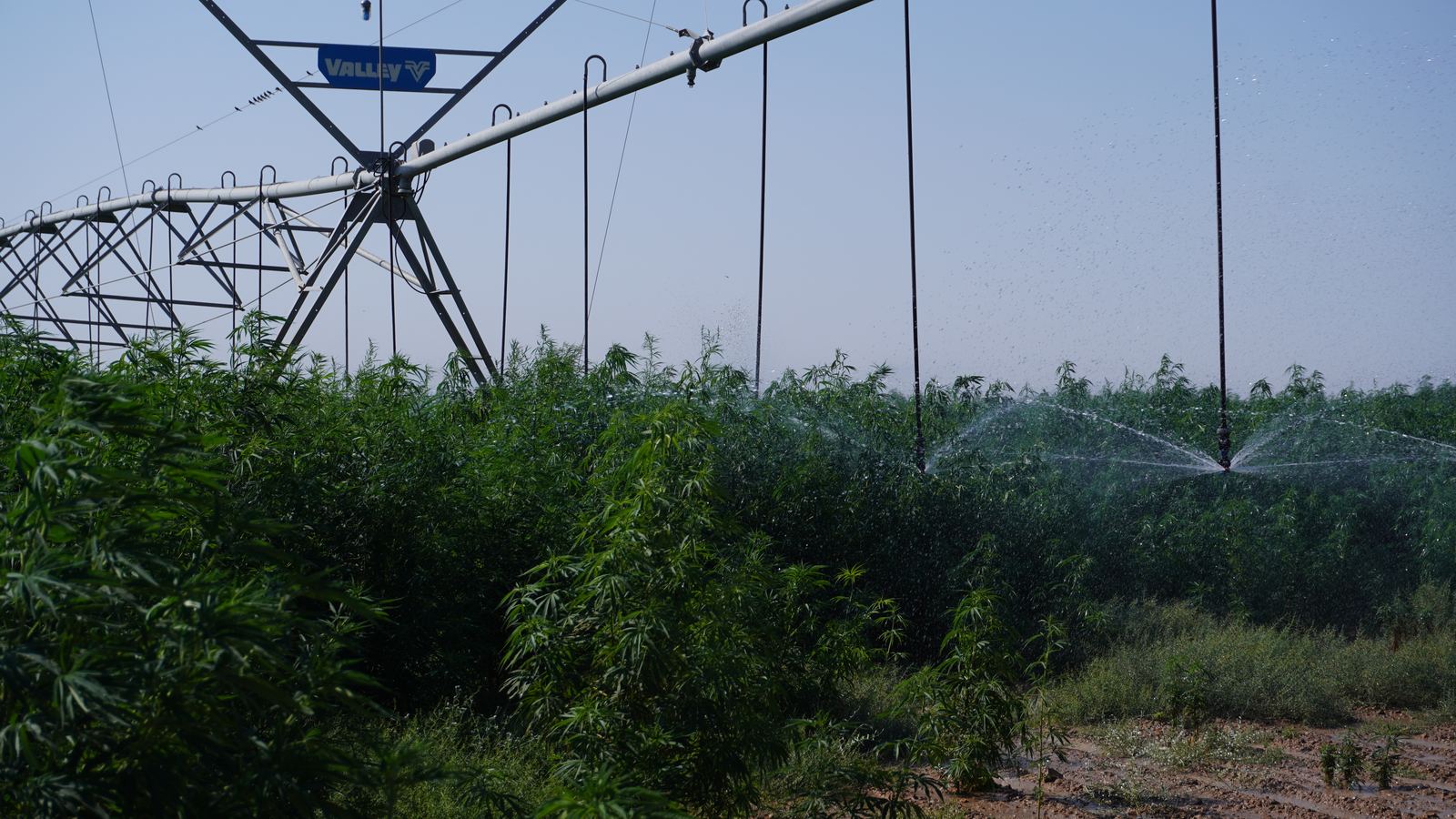
Two harvests a year, about 7 t of biomass per hectare per season.
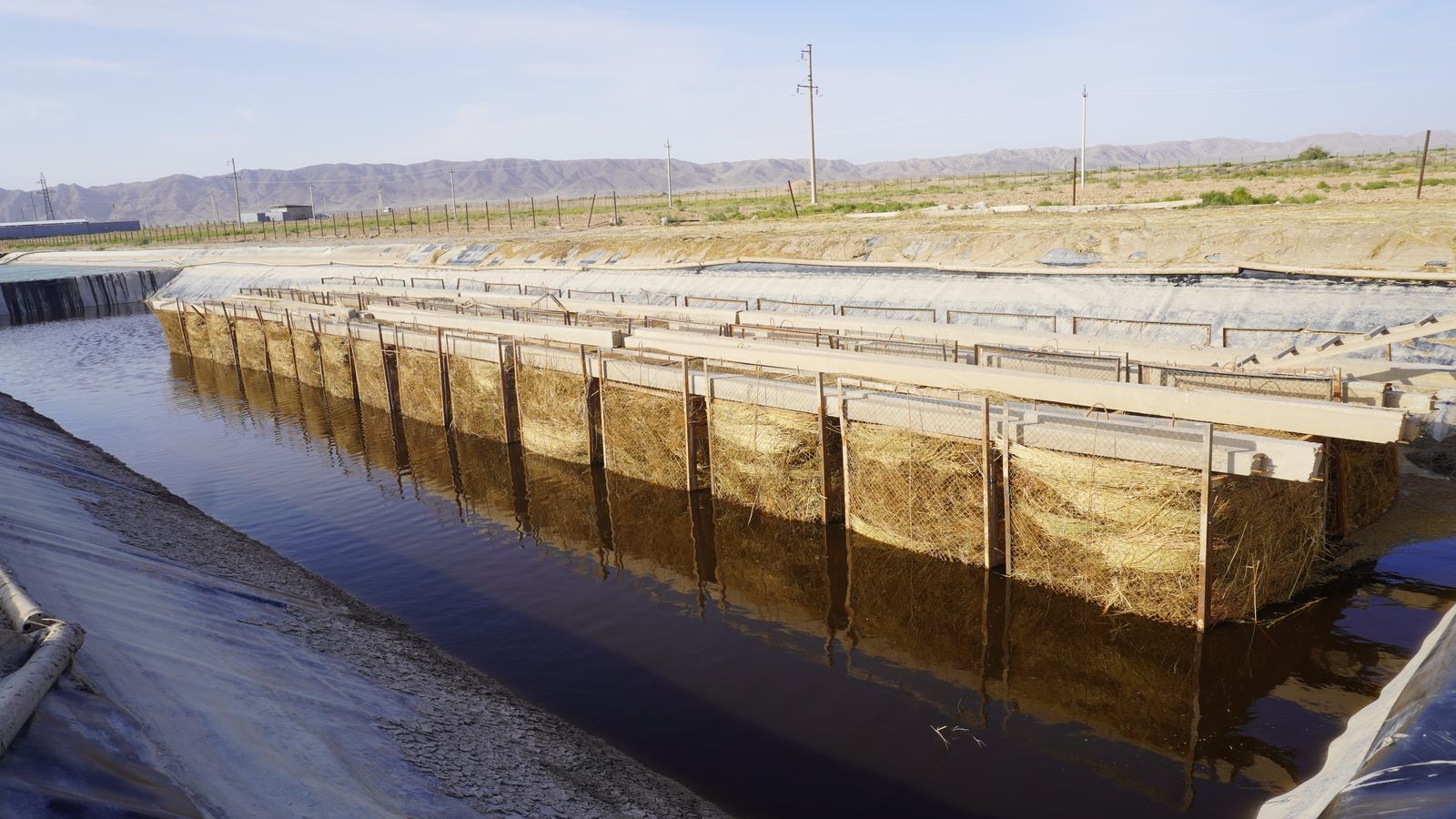
The dry, sunny climate allows two harvests a year; most hemp-growing regions get one. The cut stalk is left in windrows to dew-ret in the field, then baled and sent for processing.
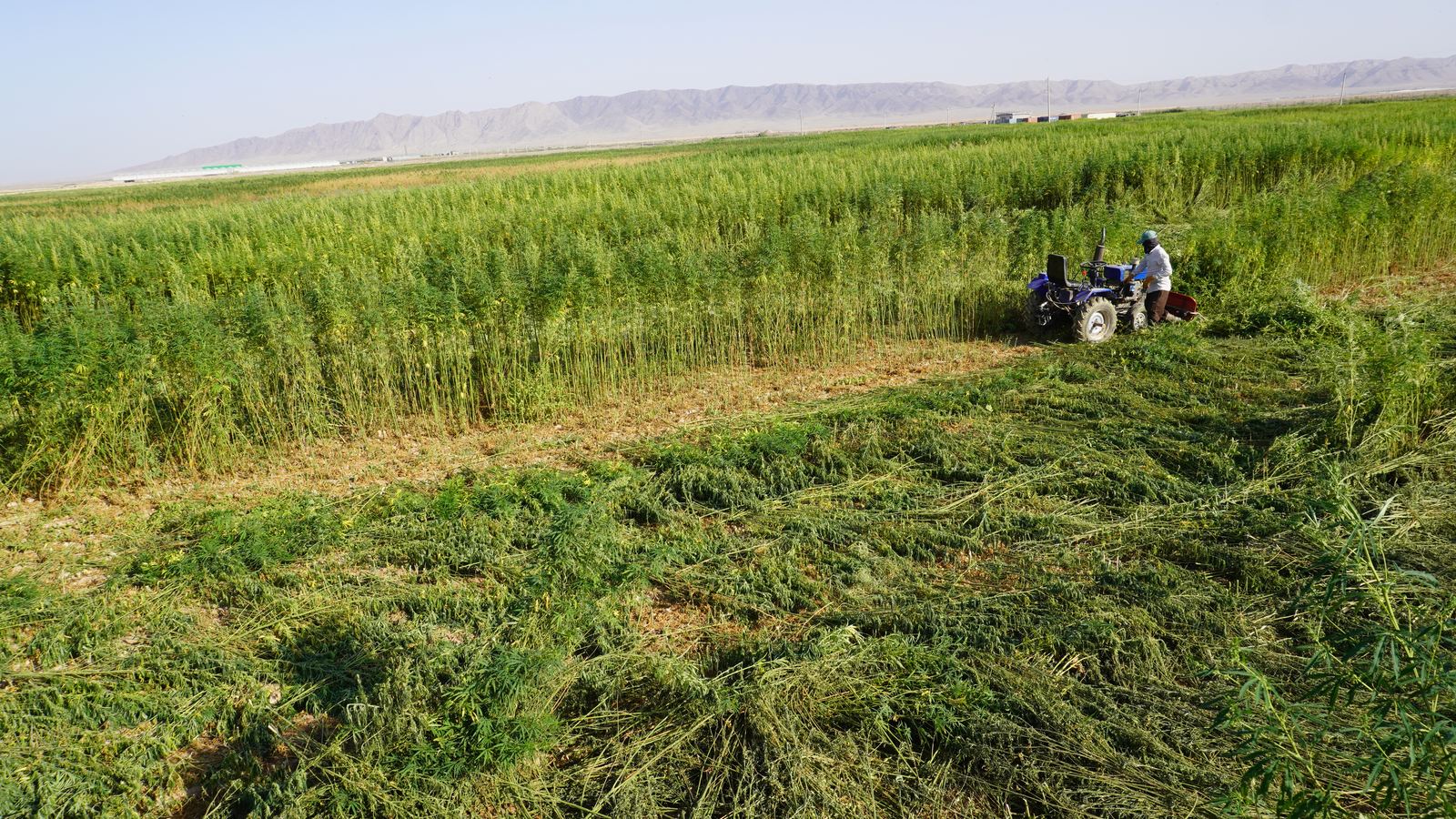
The stalk is soaked in a large pool lined with a waterproof membrane; pH is monitored with instruments.
Retting in an arid climate. A large basin with a waterproofing membrane has been built on site for this stage. pH control, water recirculation and treatment, and conversion of organic residues into fertilizer are areas the team is working on (see “Science & R&D”).
Decortication line capacity: ~3.5–4 t of raw material per hour.
The decortication lines mechanically separate the stalk into two product streams: ~20% bast fiber and ~80% hurd. The line setting is adjusted to the application: long fiber from 35 cm when supplied after decortication, 50–200 mm for fiber intended for cottonization.
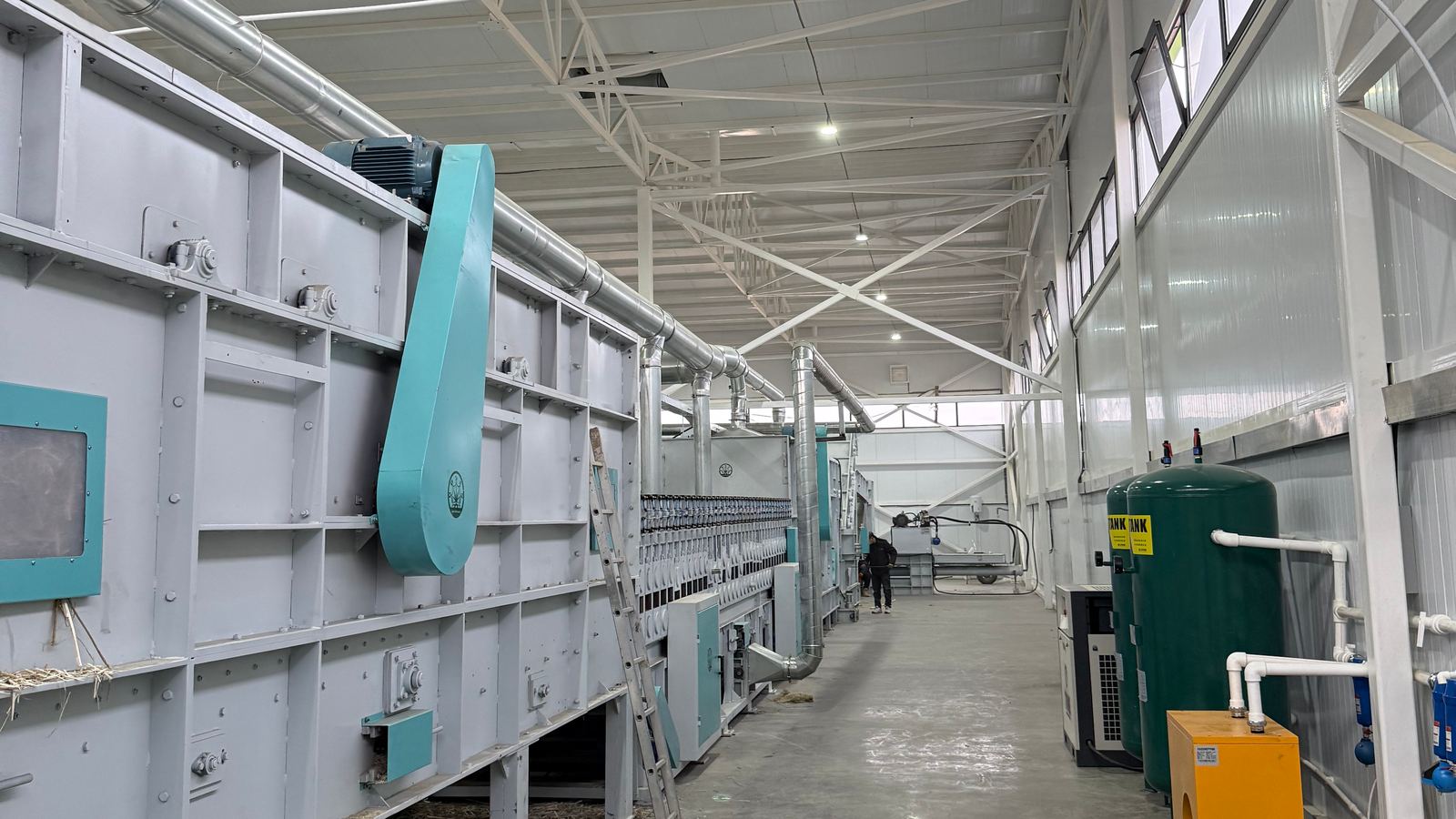
Degumming and cottonization to a staple length of 30–50 mm.
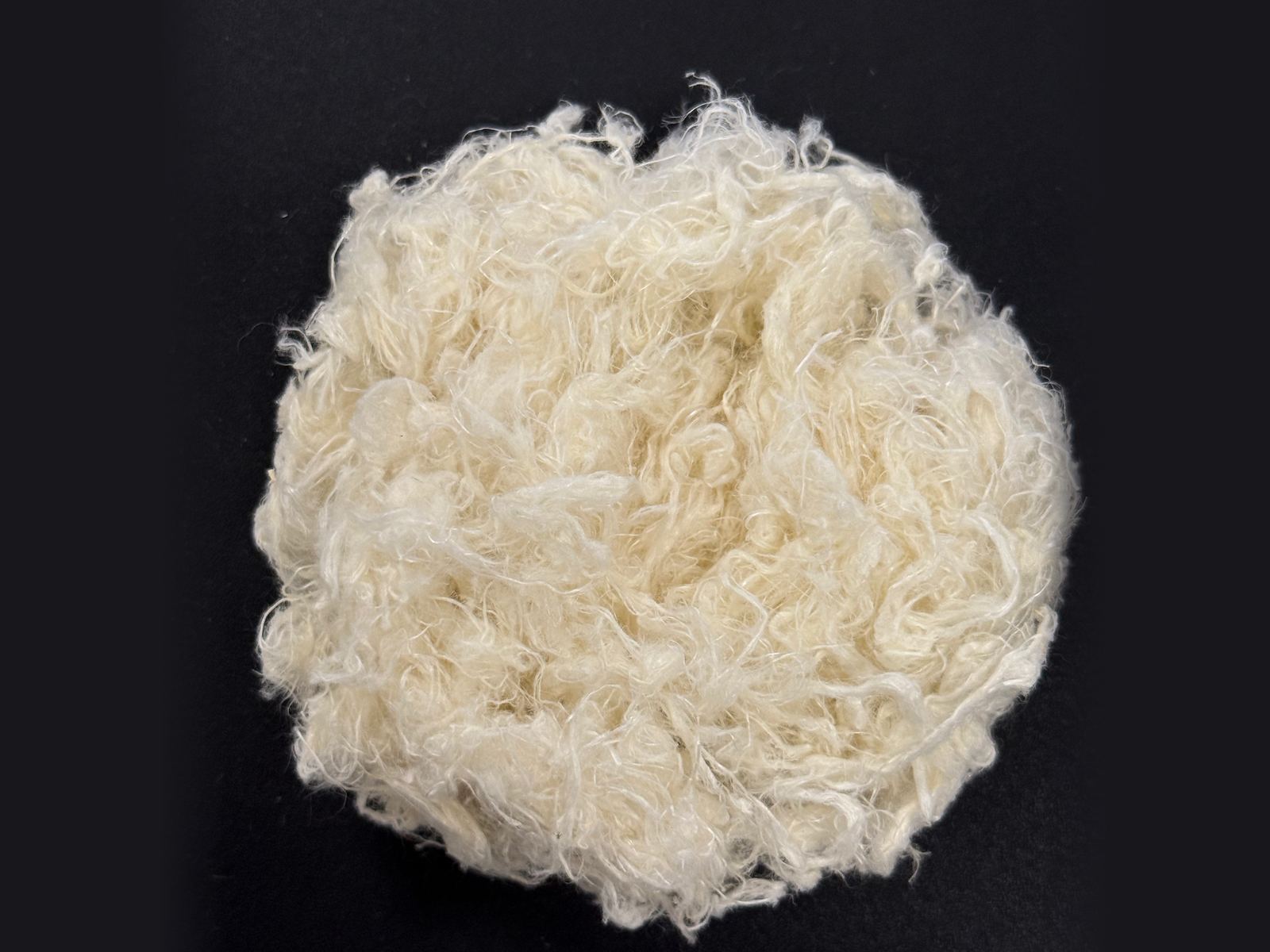
Degumming removes pectins and lignin, making the fiber softer, lighter and cleaner. Cottonization brings it to a 30–50 mm staple length suitable for blending with cotton on standard spinning equipment. Molded pallets are pressed from hurd on a 2 × 1,600 t line. Start-up of the advanced processing lines: October 2026.
Batch quality certificate, uniform bales, 40-ft containers. EXW / FCA Tashkent; FOB and CIF by agreement.
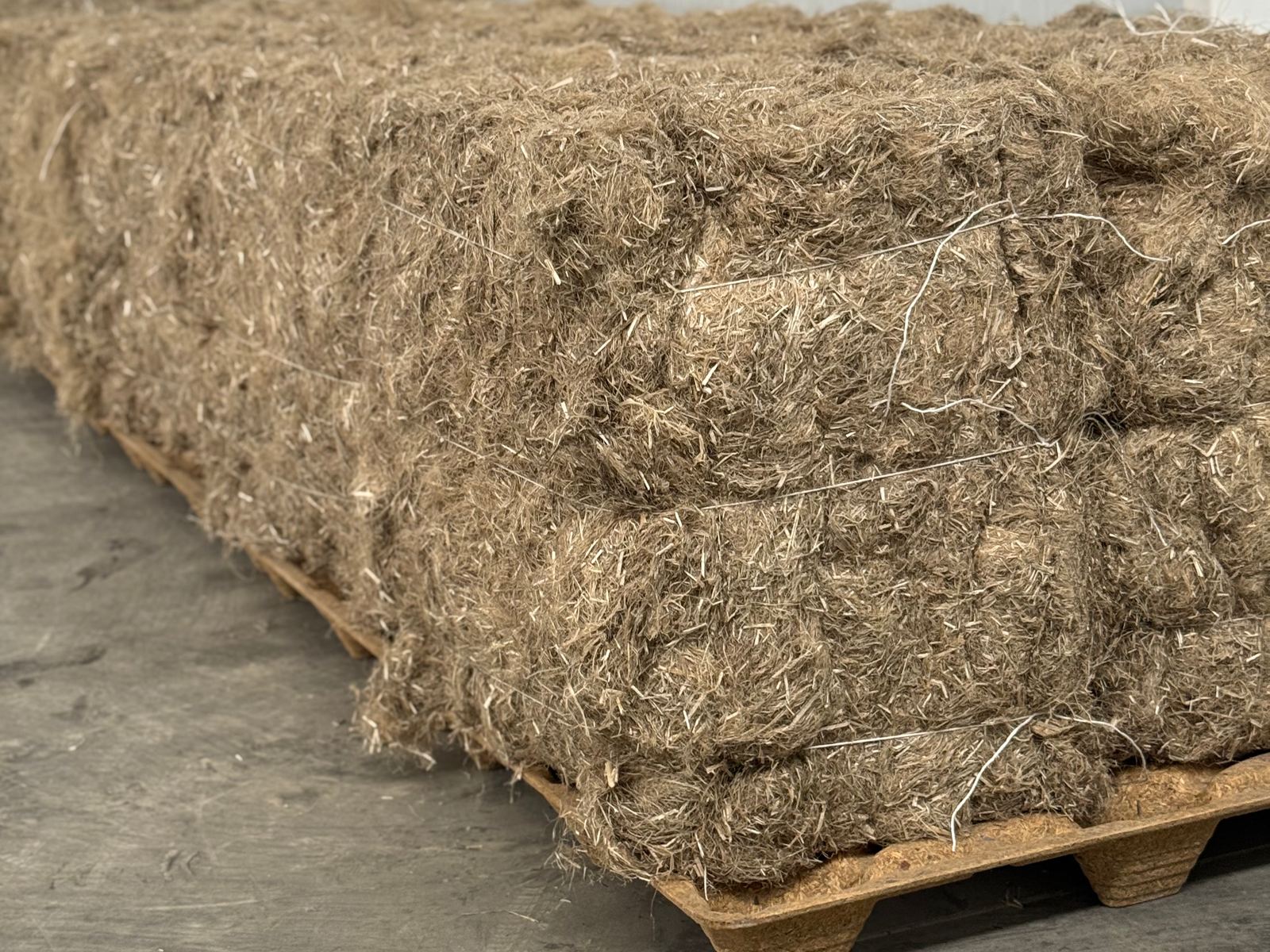
Every batch receives a quality certificate with laboratory values (moisture ≤ 12%, impurity content ≤ 15%), a certificate of origin and an electronic phytosanitary certificate with QR verification. The fiber is pressed into uniform bales, ~10.5 t per 40-ft container.
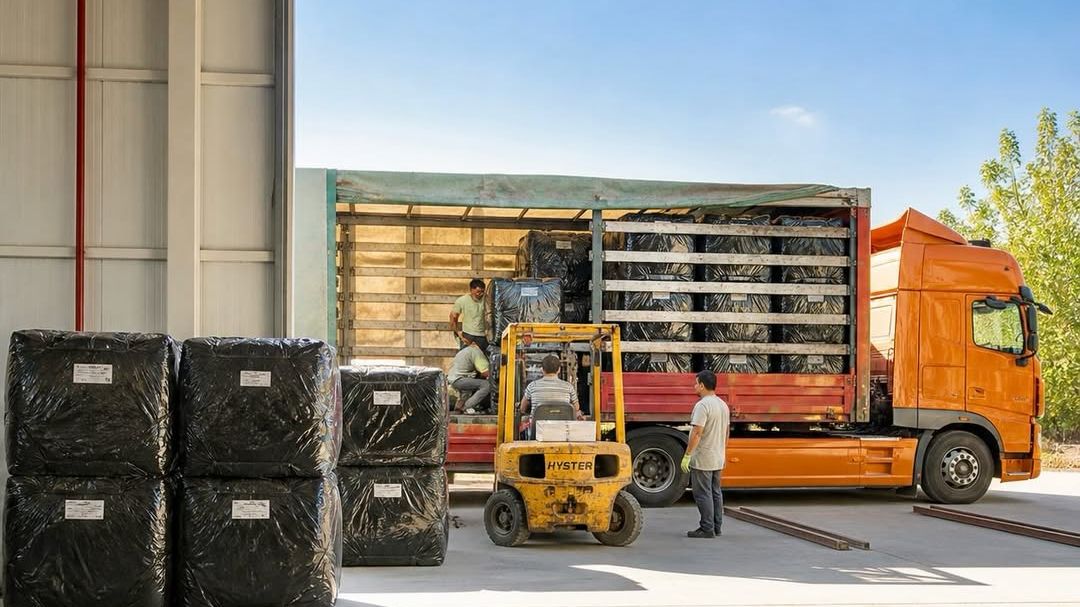
Click a stage or the “Next stage” button; the stages also switch automatically
After decortication, the stalk is split into two product streams — a zero-waste model in which both generate revenue.
Full-cycle processing at one site: decortication → deep processing → pallet pressing. Power supply — a 1,000 kW transformer.
Two lines with a combined capacity of ~3.5–4 t of raw material per hour; the stalk is split into fiber and hurd.
Cottonin staple — fiber ready for spinning together with cotton.
Molded pallets made from hurd — the end product of the composites line.
Year-round seedlings under climate control — independent of the field season.
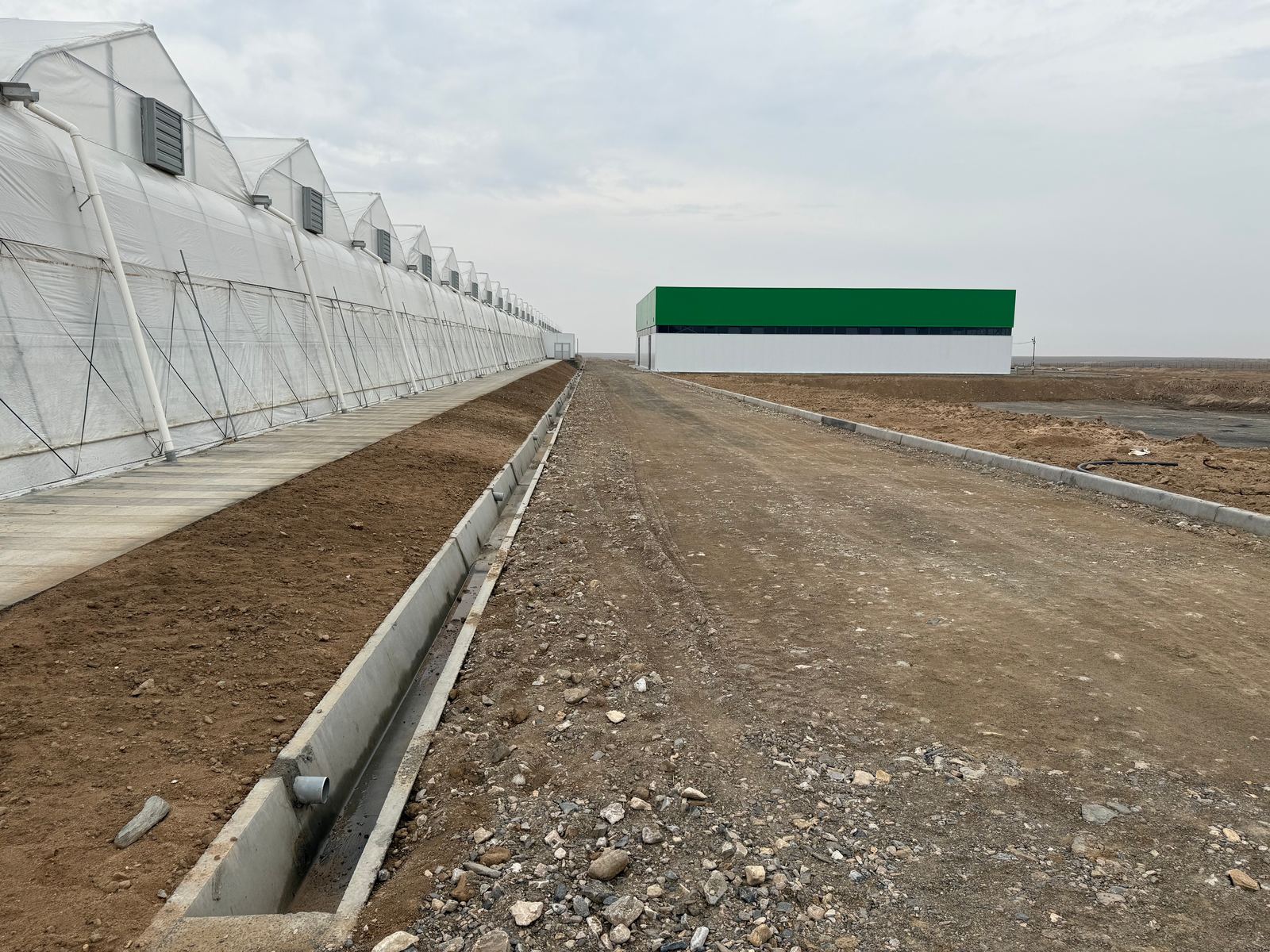
Covered area: 29 spans of 8 m each, gutter height 4.3 m.
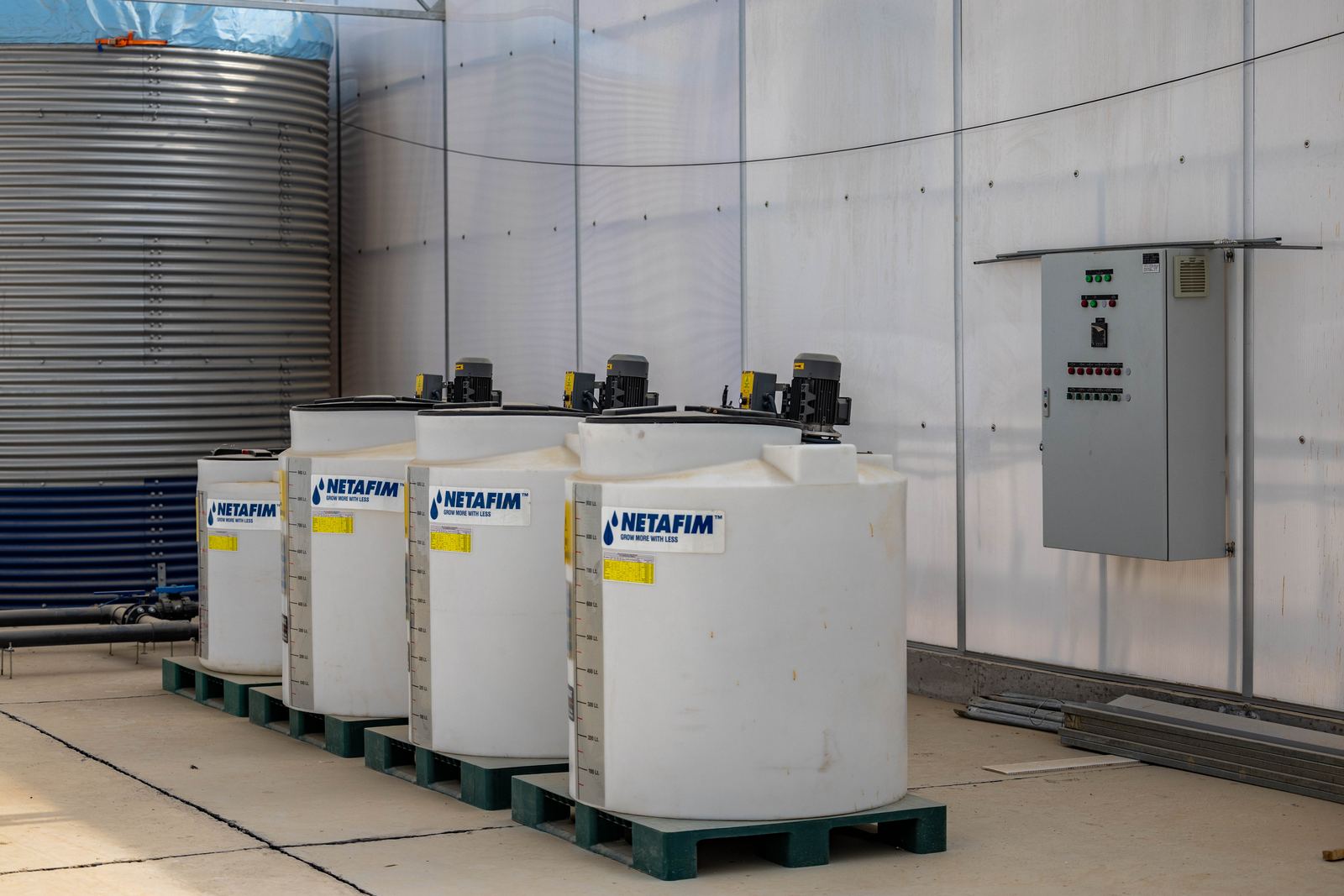
Smart control cabinets regulate ventilation, shading and cooling.
Design service life of the hot-dip galvanized steel frame.
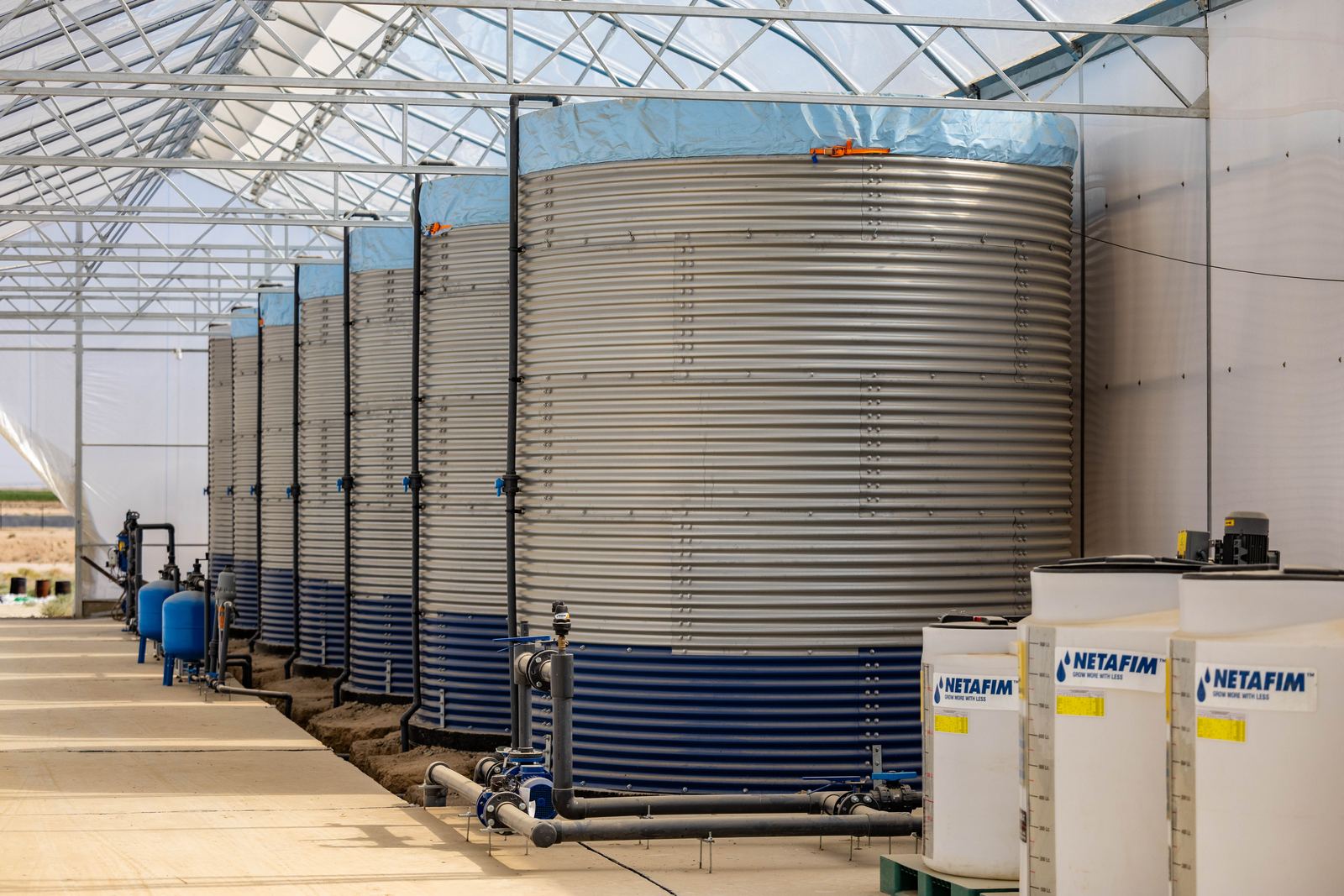
Water and nutrients are delivered in precise doses.
Controlled seedling cultivation, independent of the field season.
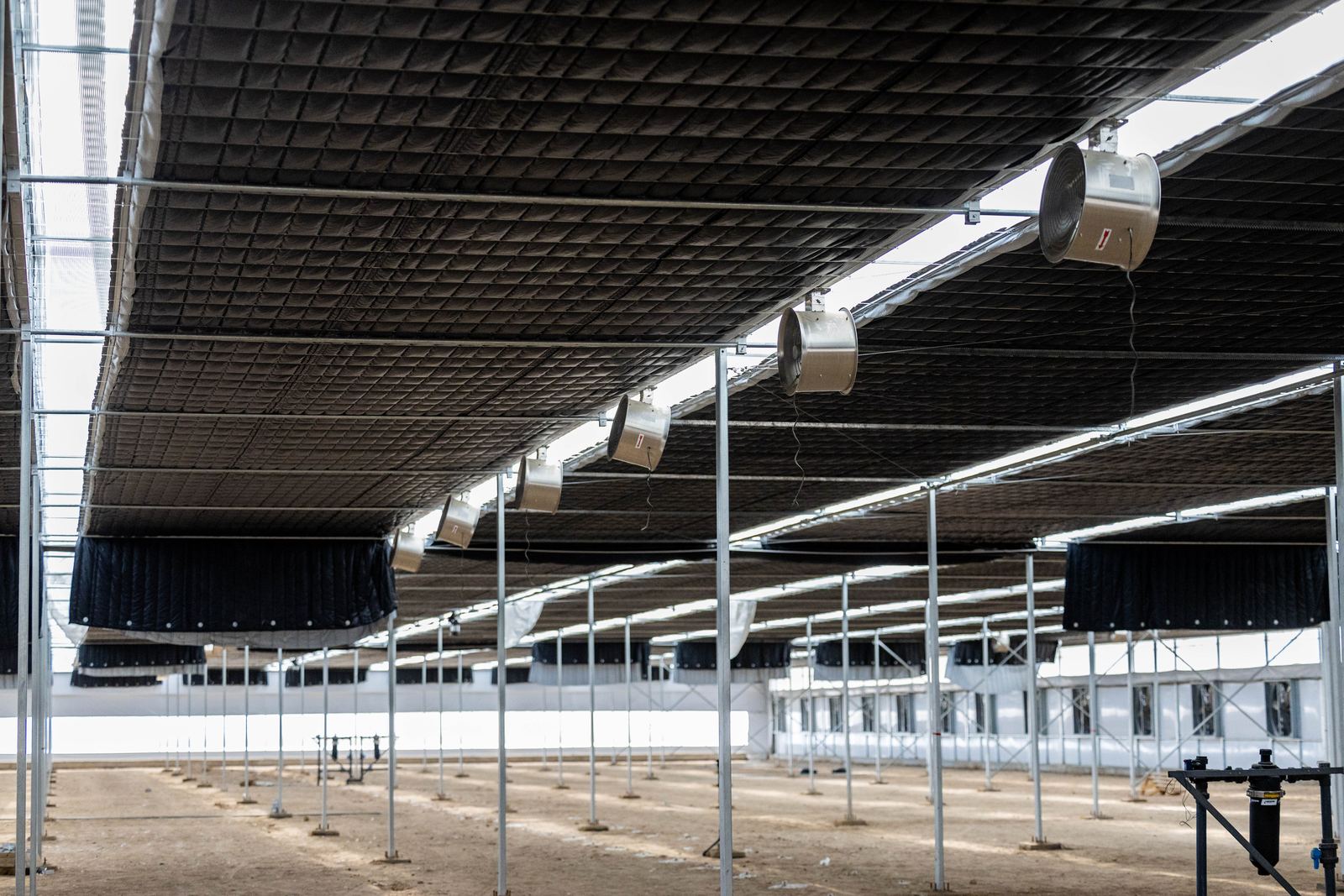
Evaporative cooling walls maintain the microclimate in desert conditions.
Every batch is grown, processed and documented in-house — and tested to international methods in independent laboratories.