From Uzbekistan to the global market
Own fields, deep processing and export of fiber and hurd — under a state licence.
 Resolution No. 511 · oversight of commitments
 Ministry of Agriculture of Uzbekistanlicence No. 108836
 Navoi Region Khokimiyatproject land · 1,015 ha
 Kiziltepa District Khokimiyaton-site cooperation
 Plant Quarantine Inspectorateelectronic phytosanitary certificates
 National Guard of Uzbekistansecurity of the cluster site
 Navoi Region Internal Affairs Departmentregistration of foreign specialists
 cadastral records · crop monitoring
 Academy of Sciences of Uzbekistanfiber testing
 TITLItextile test methods
 center-pivot irrigation
 greenhouse fertigation
 pumping station
 partner bank
The cluster was established by Cabinet of Ministers Resolution No. 511 of 20 September 2022 and covers the full cycle — from cultivation to export — on land returned to agricultural use. 2025: first export shipment (China); 2026: export contract with a buyer in India.
Target markets. Dispatch hubs: Navoi (FEZ, international air hub) and Tashkent; rail corridors to China, South Asia, the Persian Gulf and Europe. Hover over a point to highlight the route.
Zero-waste processing: 100% of the stalk becomes product — fiber at three levels of refinement and clean hurd. Two lines of business: textiles and composite materials.
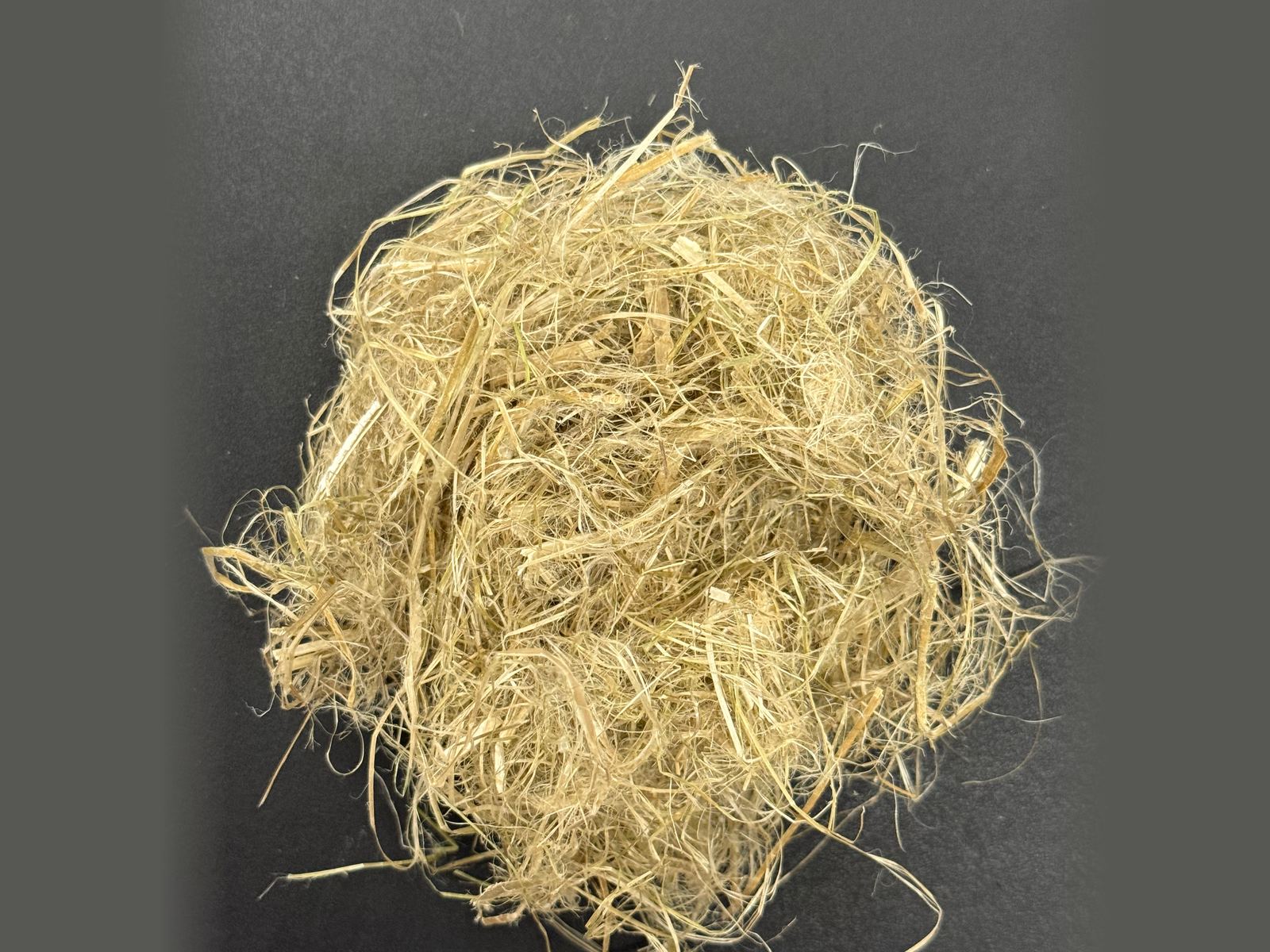
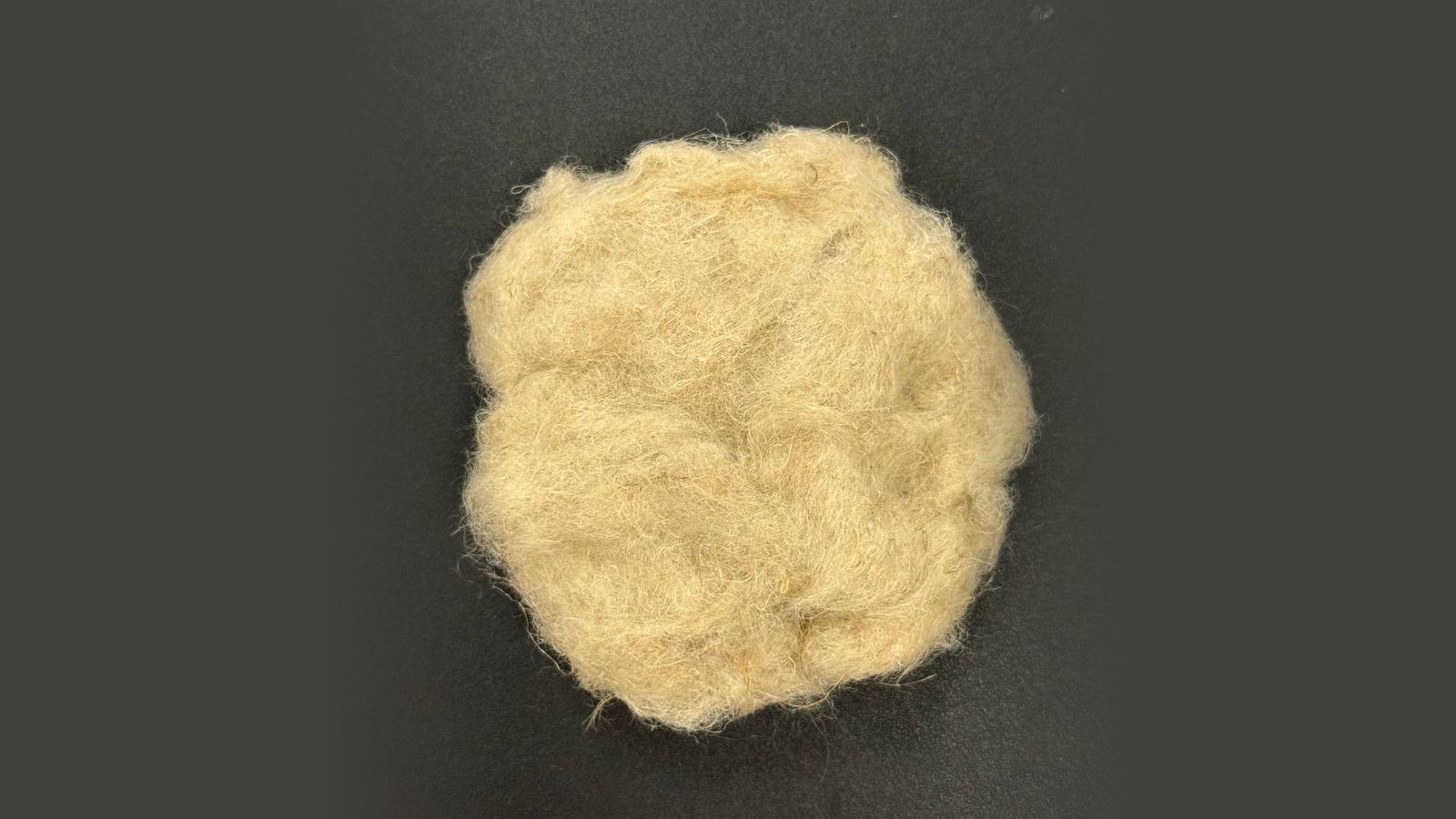
Strong fiber with a natural texture — raw material for further processing and composites.
Textiles · composites · nonwovens
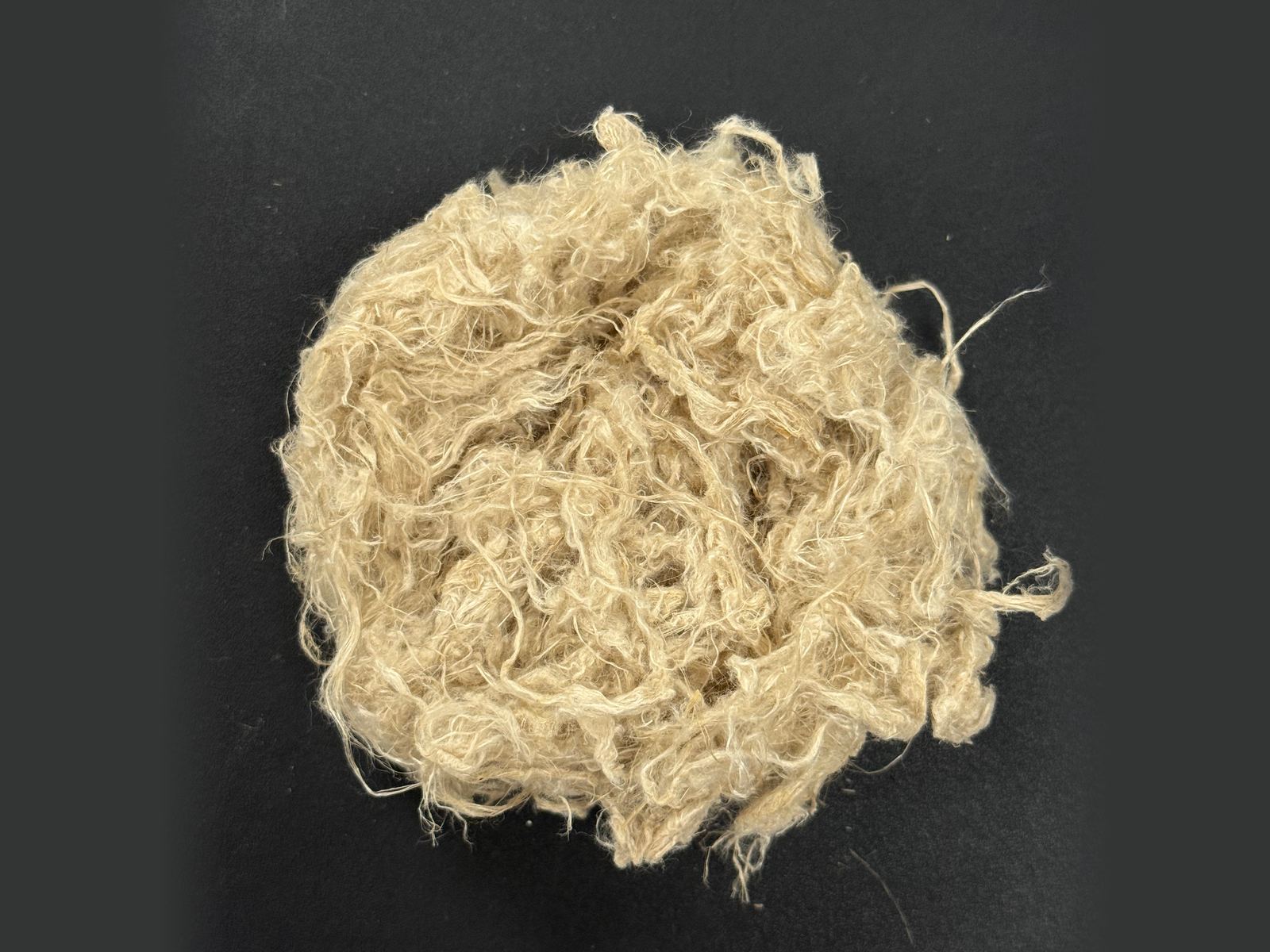
Made to the buyer's specification: pectins and lignin are removed, so the fiber is softer, lighter and cleaner, and suitable for spinning.
High-end apparel · biocomposites
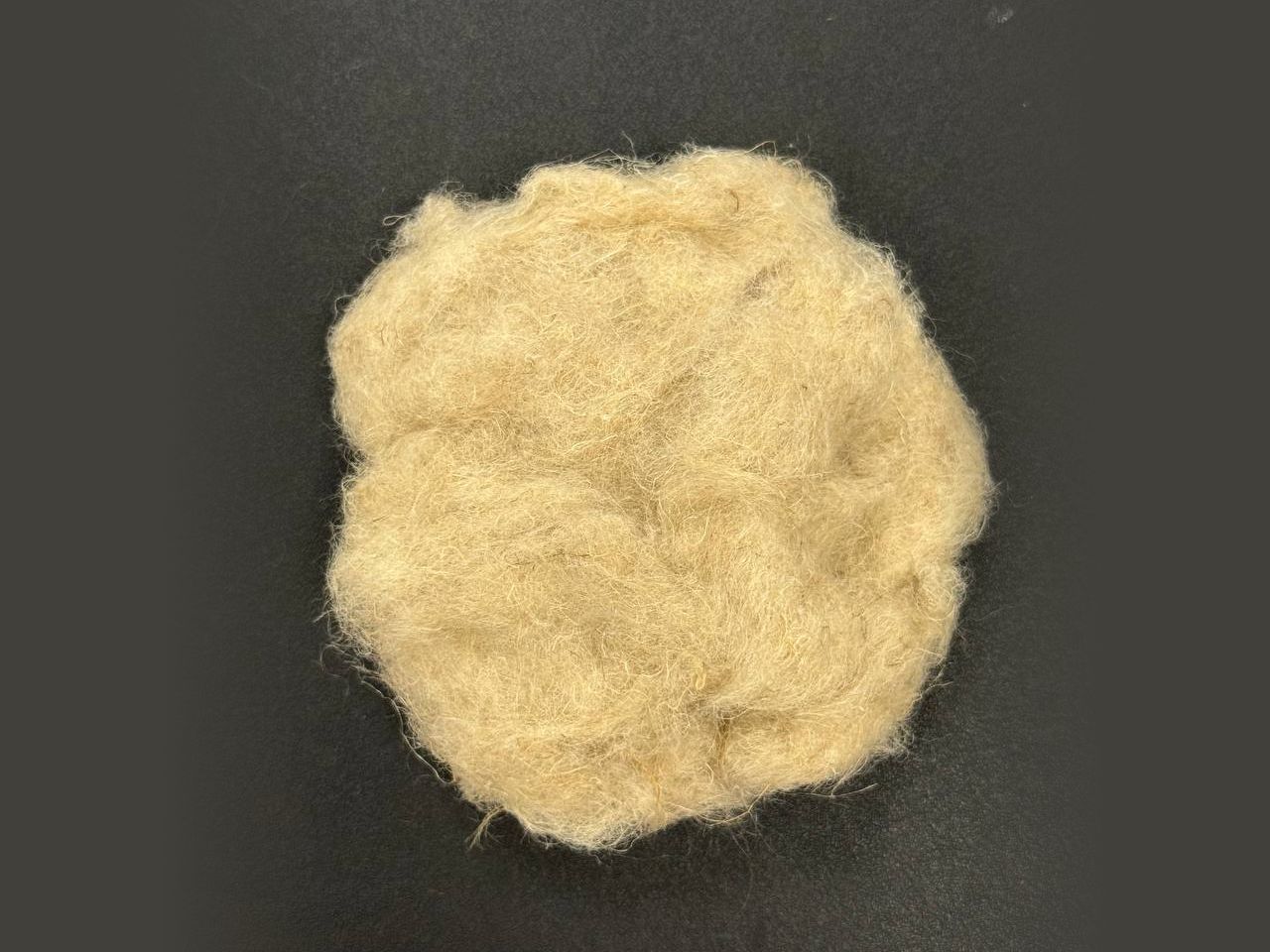
Staple length 30–50 mm — blends with cotton on standard textile mill equipment. Production from Q4 2026.
Premium yarn · eco-denim
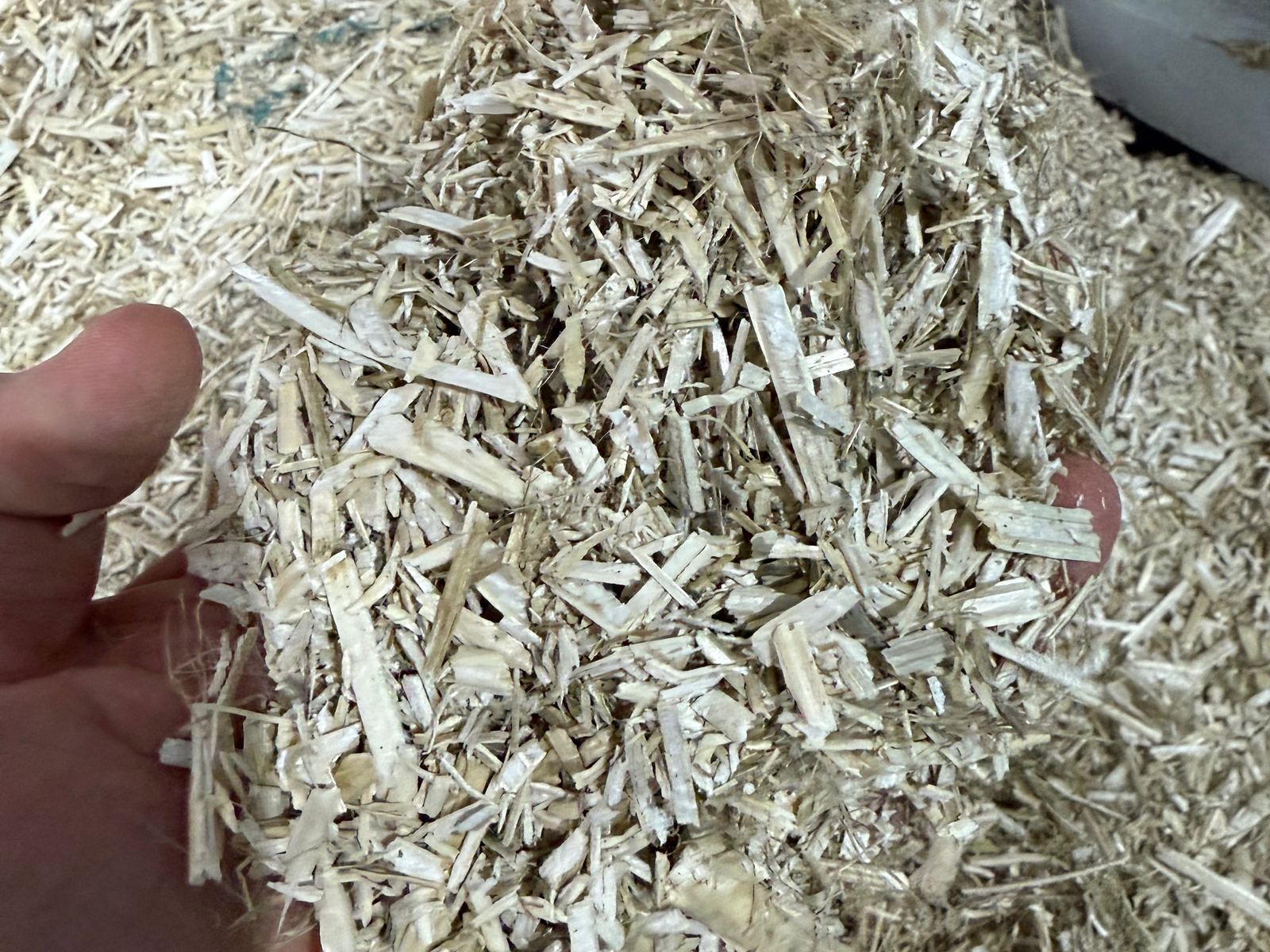
Clean, low-dust hurd — 80% of the stalk: raw material for molded pallets, hempcrete, insulation and animal bedding. In bulk or in big bags.
Molded pallets · hempcrete · insulation · boards — in development
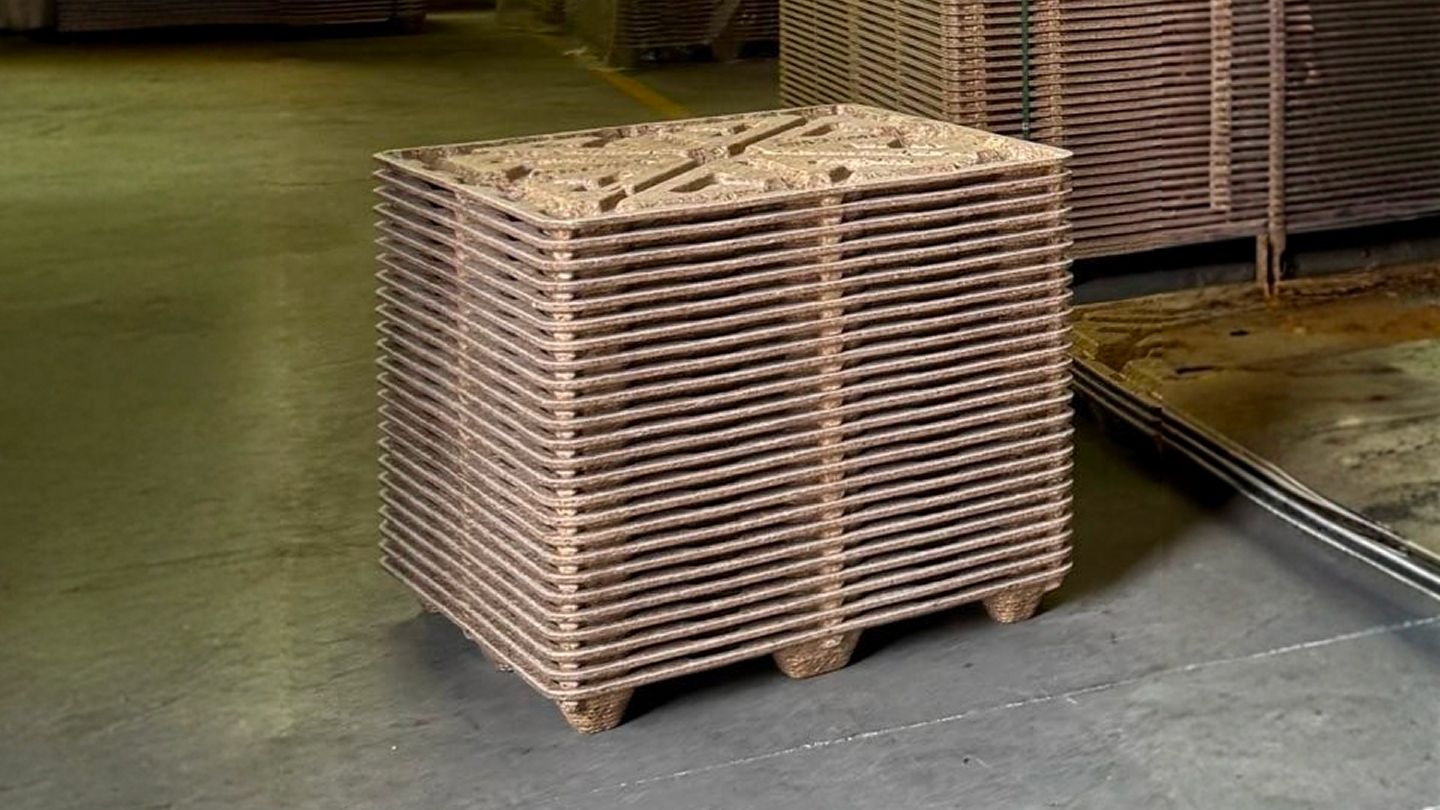
Pressing line 2 × 1,600 t. Pallet 1,200 × 800 × 130 mm, about 15.6 kg: stackable design, exempt from ISPM-15 fumigation and marking. Hurd-based board materials are in development.
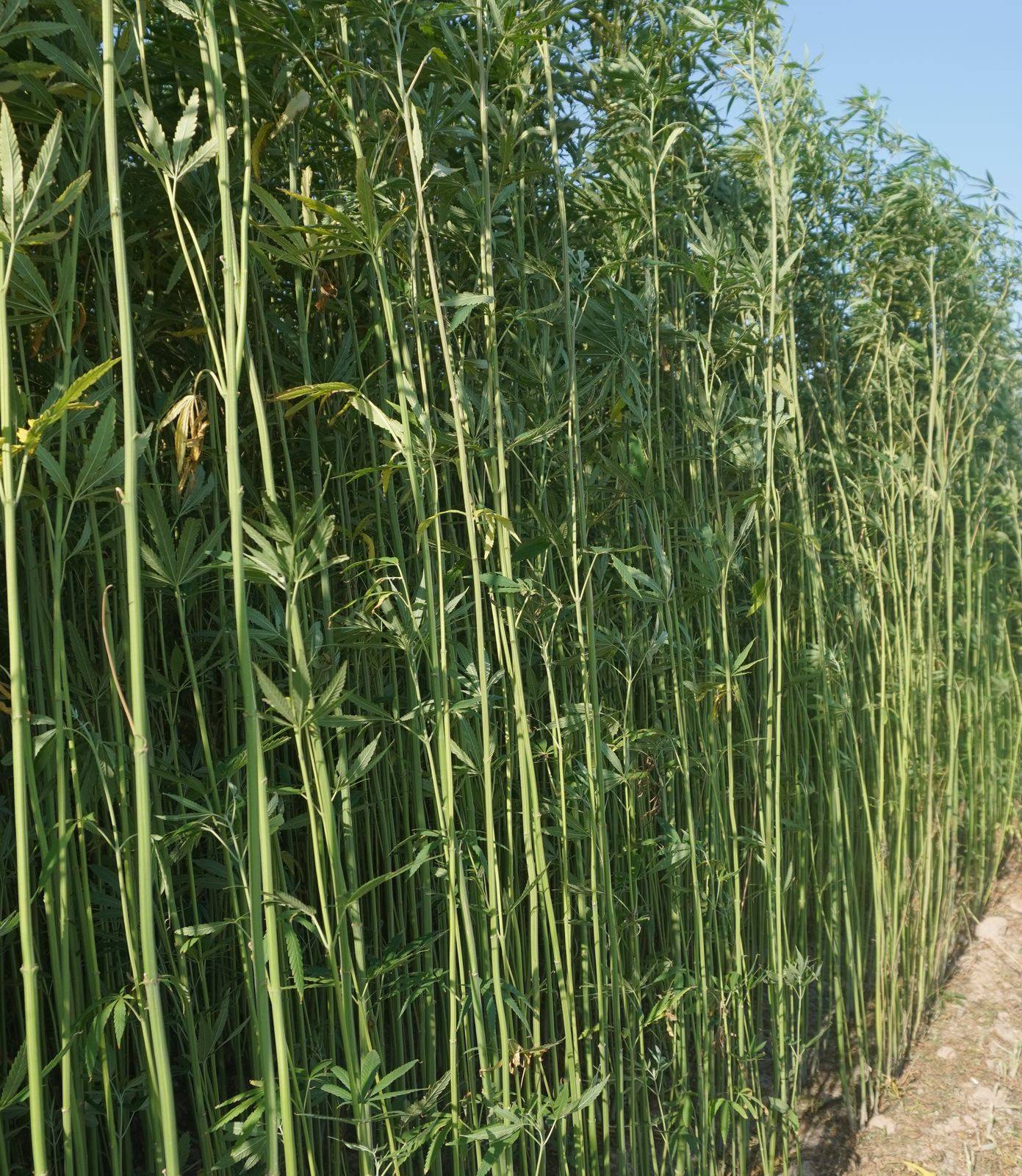
The dry, sunny climate of Navoi Region allows two harvests a year — most hemp-growing regions of the world get one.
Navoi climateEvery batch is grown, processed and documented by us. No intermediaries between the field and the container.
Full cycleState licence, annual testing to confirm THC < 0.2%, electronic phytosanitary certificates with QR verification for every batch.
Licence No. 108836Navoi FEZ and international air hub; rail corridors to China, South Asia, the Persian Gulf and Europe.
Navoi FEZAffordable land, energy and workforce in a region where agribusiness is actively developing — a lasting price advantage.
Navoi RegionFiber parameters are confirmed by the Academy of Sciences of the Republic of Uzbekistan and TITLI — independently tested, not just claimed.
98.3% celluloseLicensed varieties with THC < 0.2% under precision center-pivot irrigation.
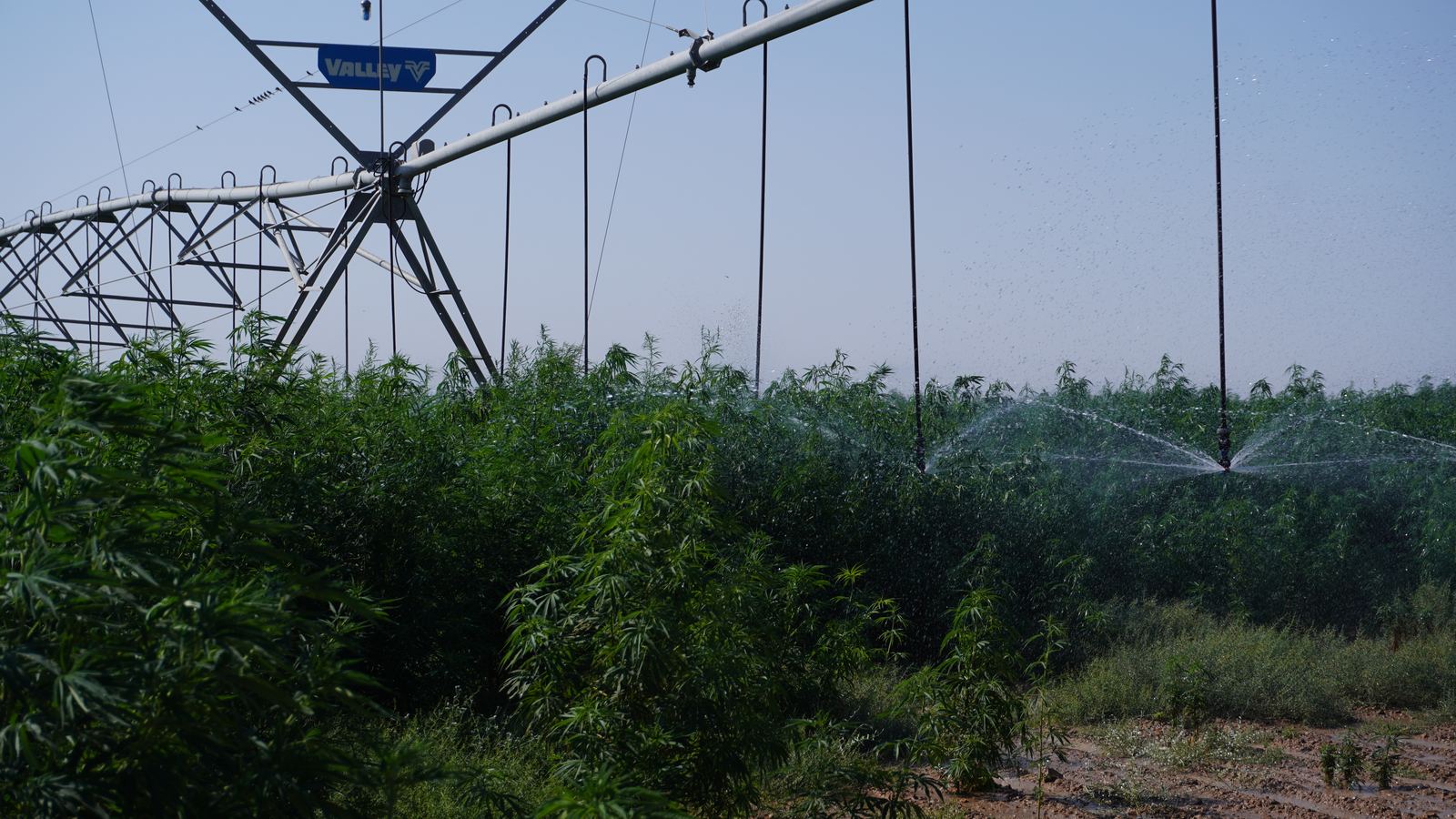
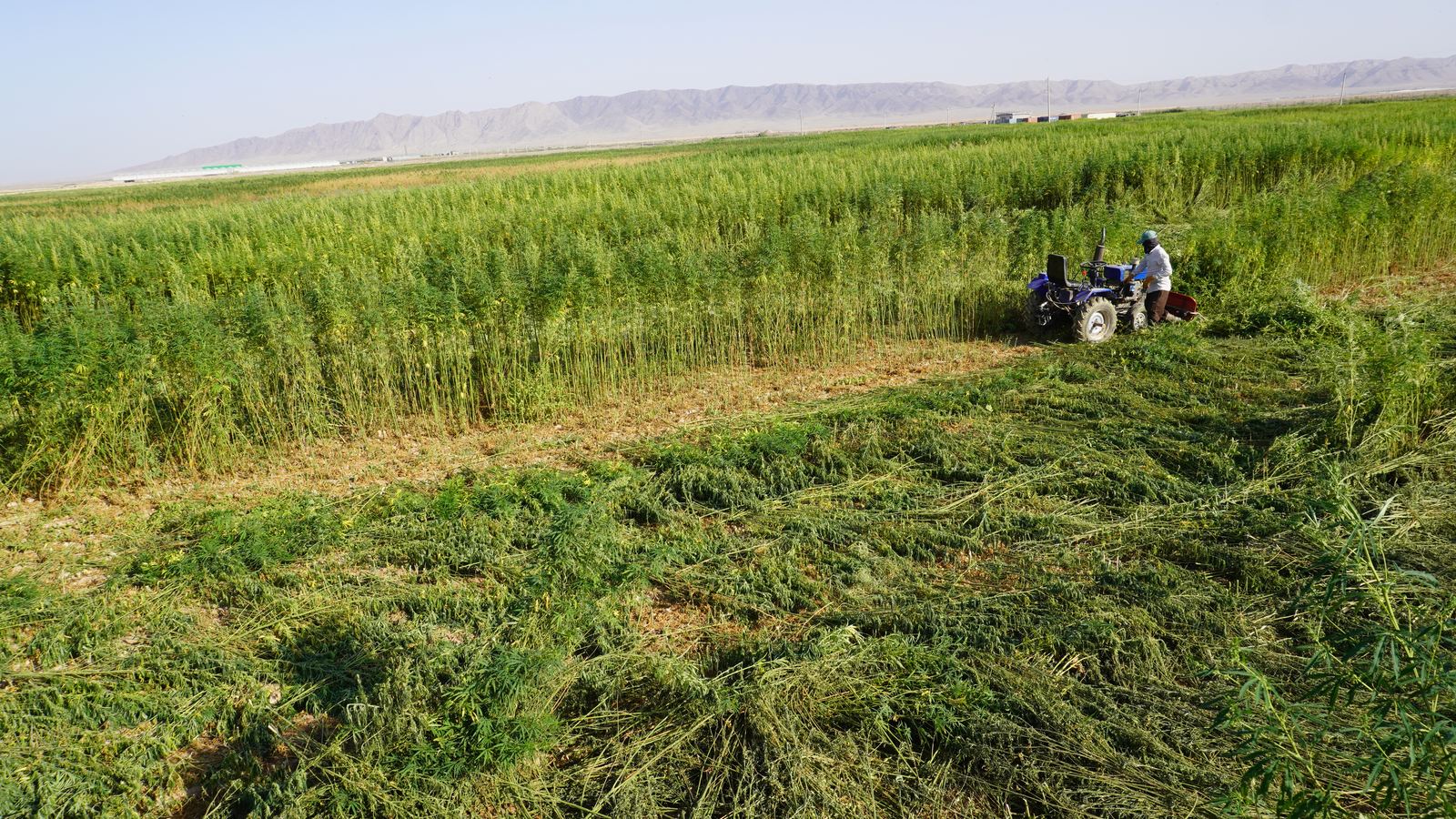
Two harvests a year, about 7 t of biomass per hectare per season. The cut stalk lies in windrows and is then baled.
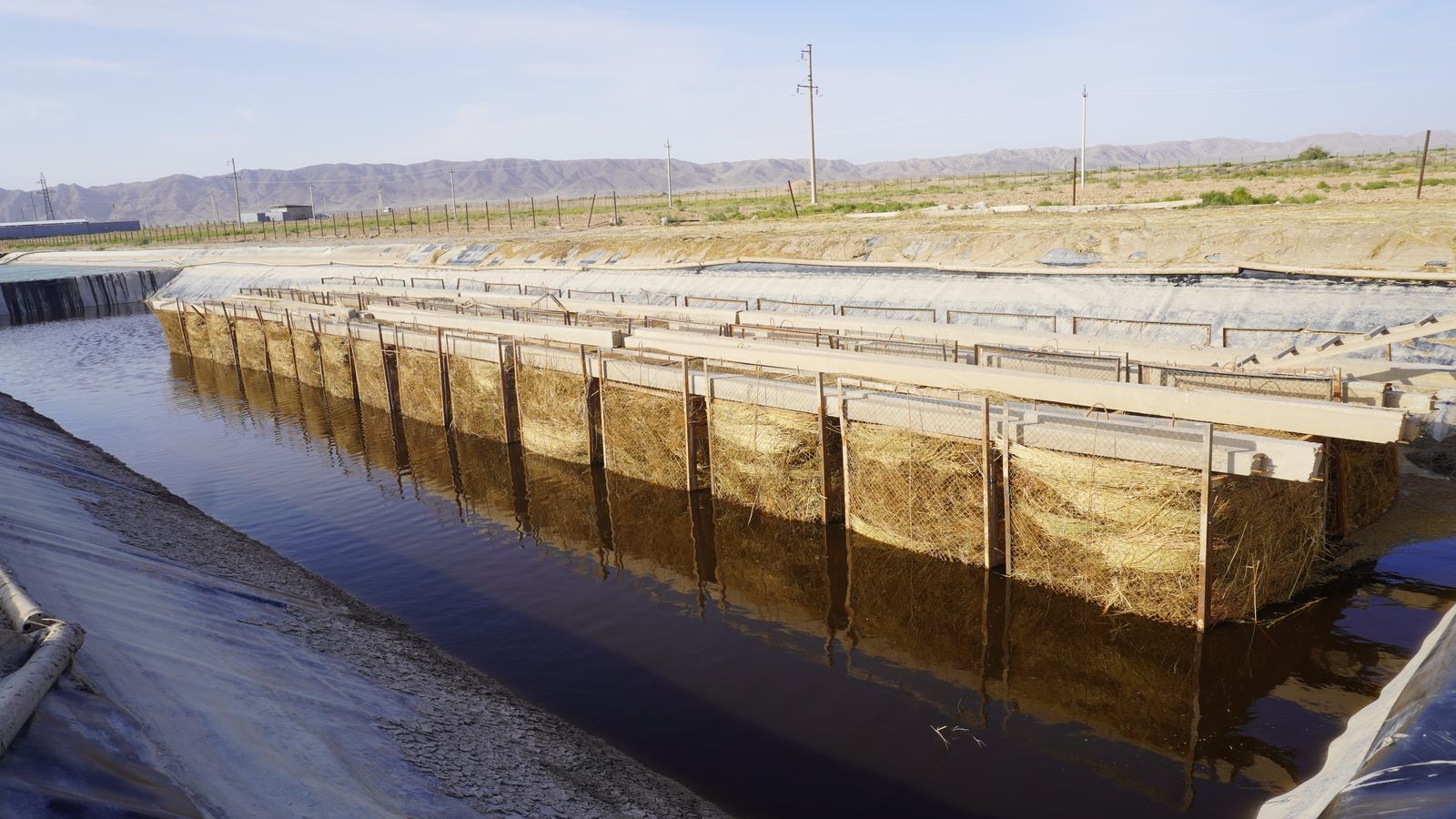
The stalk is soaked in a large pool lined with a waterproof membrane; pH is monitored with instruments.
Decortication line capacity: ~3.5–4 t of raw material per hour. The stalk is separated into bast fiber and hurd.
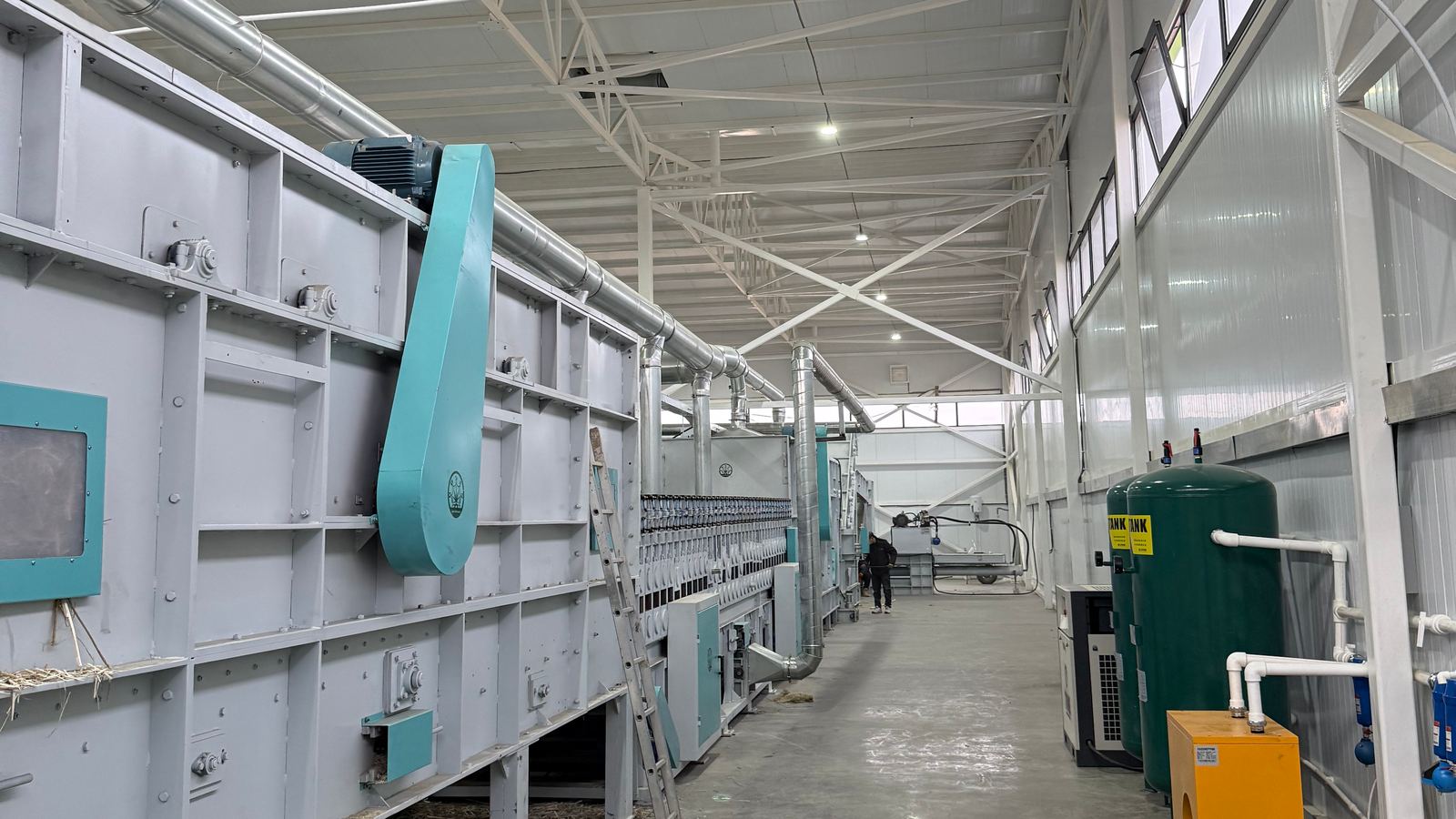
Degumming and cottonization to a staple length of 30–50 mm; pressing of molded pallets from hurd on a 2 × 1,600 t line.
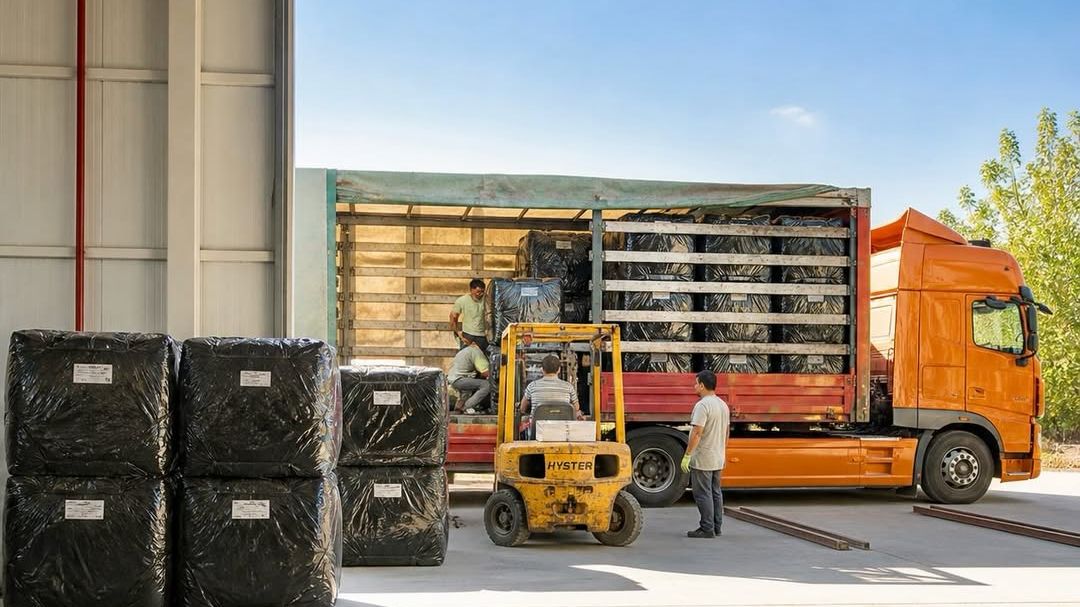
Batch quality certificate, uniform bales, 40-ft containers. EXW / FCA Tashkent; FOB and CIF by agreement.
Click a stage or the “Next stage” button; the stages also switch automatically
cellulose content of the fiber — higher than cotton (~90%)
Physical and mechanical tests were carried out by the Academy of Sciences of the Republic of Uzbekistan and the Tashkent Institute of Textile and Light Industry. Breaking tenacity is on par with premium Pima/Supima cotton.
Desert land has been returned to use, water is saved and there is no waste. Hemp products replace wood, plastic and synthetics.
absorbed by one hectare of hemp per cycle — roughly twice as efficient as forest*
less water than cotton* — a decisive factor in an arid region
of the stalk is used — both fiber and hurd become products
the land was out of agricultural use — today it is back in productive, licensed use; no pesticides are applied
* Based on industry data.
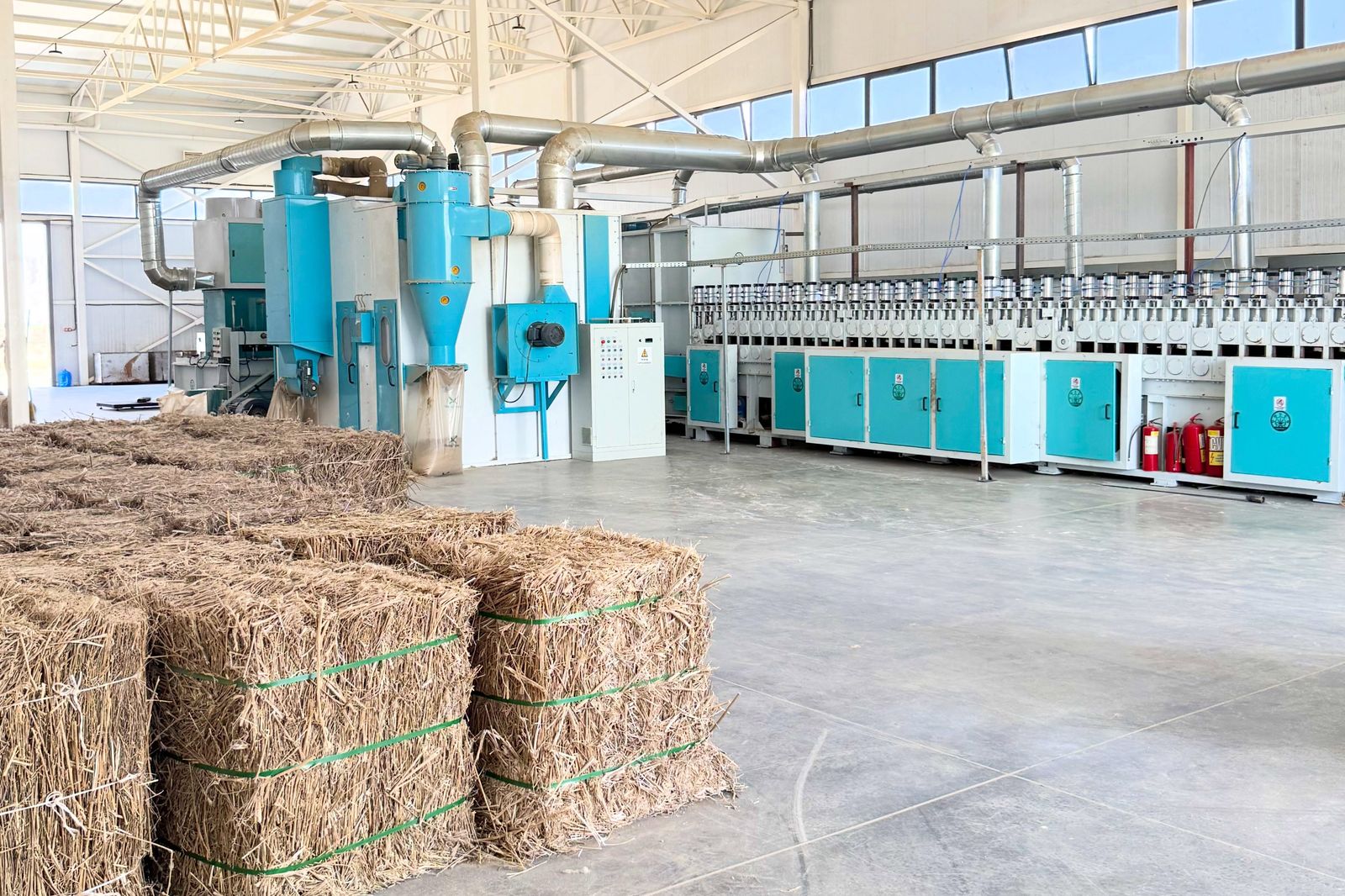
Every meter of this workshop tells the same story: raw stalk becomes clean fiber without leaving the building. Decortication, cleaning and sorting form one continuous process, laid out from start to finish. And this is only the current stage: new lines are already on their way to Uzbekistan. Hemp Farm is being built with scale in mind.
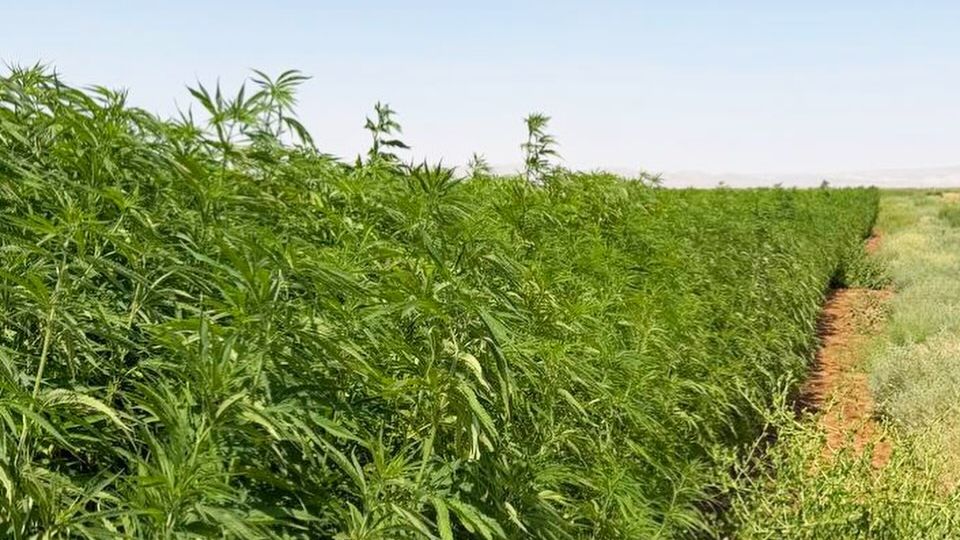
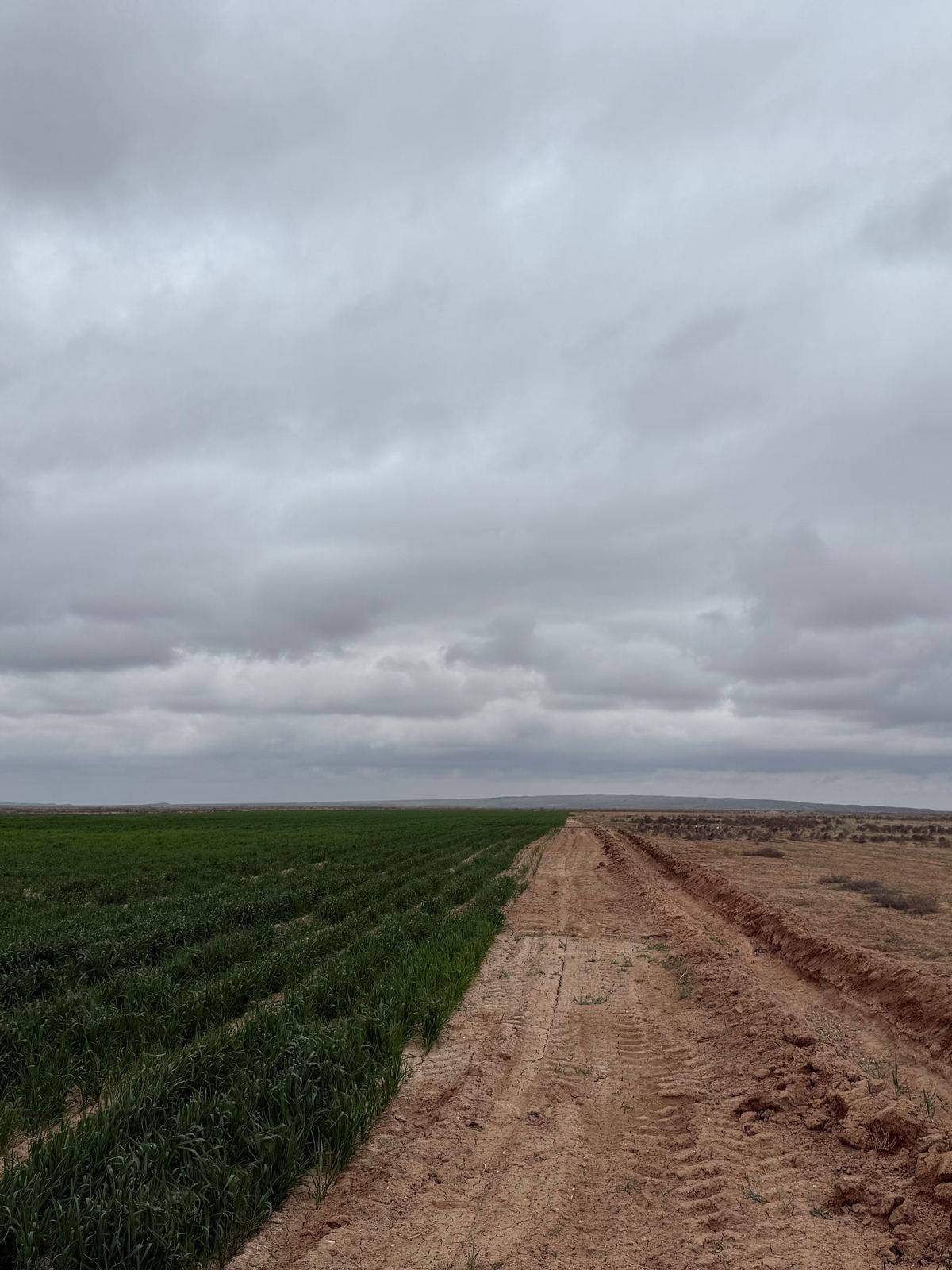
Behind every harvest are people. When people talk about 1,015 hectares of industrial hemp, they usually think of numbers; we think of the people who work on every hectare. Since 2022, Hemp Farm's agronomic work has been led by chief agronomist Mukhriddin Juraev, a graduate of Tashkent State Agrarian University in plant breeding. Before joining the company, he worked for several years in Uzbekistan's state agricultural inspection system. In the heat, when temperatures reach 50–60 °C, he and his team irrigate every day, monitor the condition of the crops and carry out all field work. The project covers 1,015 ha, and about a third of the land has been brought into cultivation so far. The region's climate allows two harvests a year: the cultivated area is expanding, and previously degraded land is being returned to use. This is more than agriculture: it is land restoration and climate resilience. And this is only the first chapter of a bigger story.
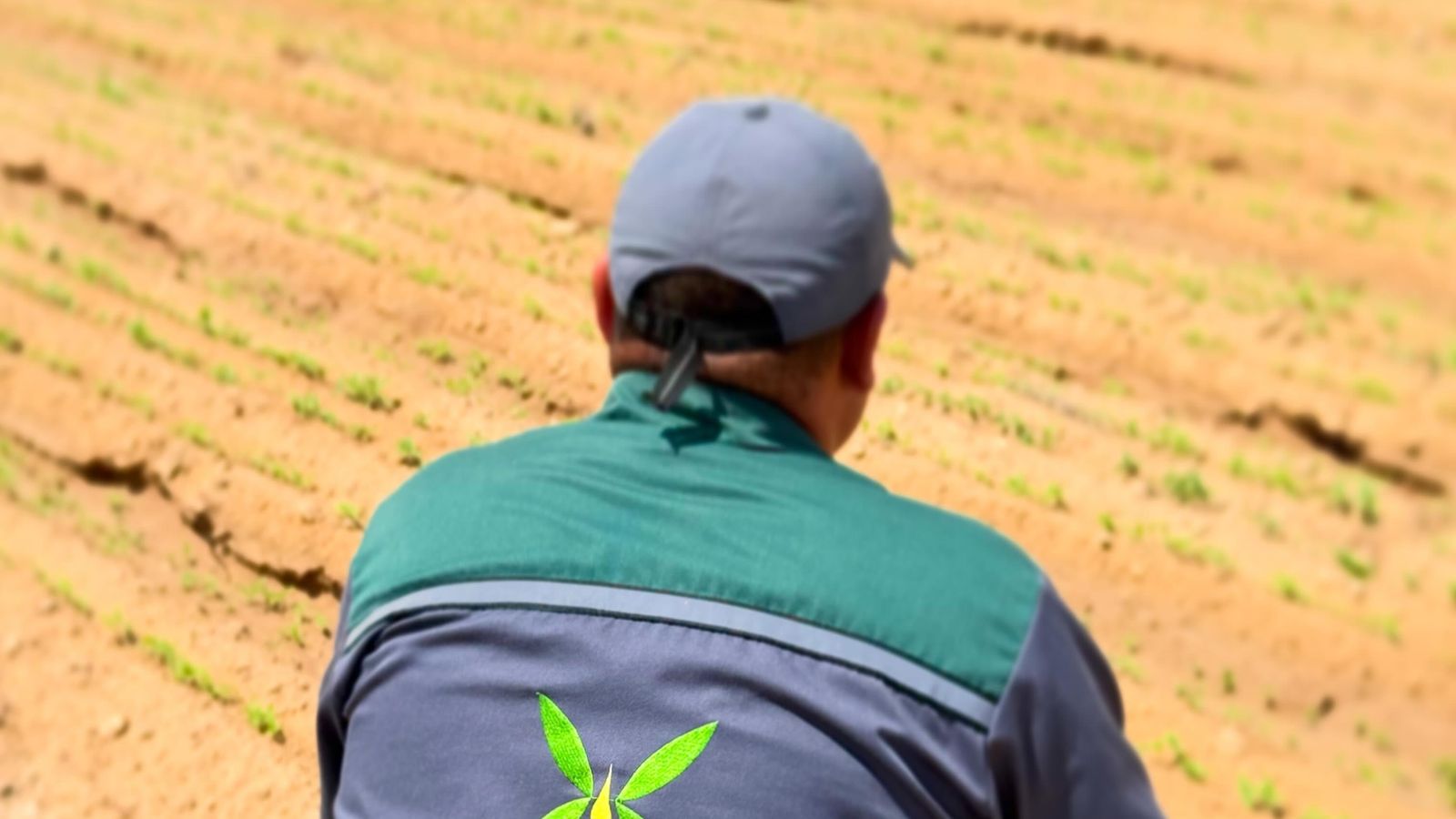
Hemp Farm has opened the first of its two 2026 growing seasons. The photo shows sown plots with the first industrial hemp seedlings on the cluster's irrigated fields, and a company employee in the field.